
TempleOS Editorial
5 Famous Temples in Karnataka You Must Visit: For Faith, Nature, Wellness
Karnataka's revered temples bring together faith, heritage, nature, and community. Here are five destinations worth visiting—and a look at how modern administration can support sacred institutions without replacing tradition.

Karnataka is home to some of India's most revered temples, especially across Udupi, Dakshina Kannada and the Western Ghats. These temples are not only places of worship but also centres of culture, community service, traditional practices and heritage.
Some are also associated with traditional beliefs about wellness and healing. While these beliefs are an important part of local culture, they should not be confused with scientifically proven medical treatments. A temple visit should never replace professional medical care.
Here are five famous temples in Karnataka that deserve a place on your must-visit list.
1. Sri Mookambika Temple, Kollur – Udupi
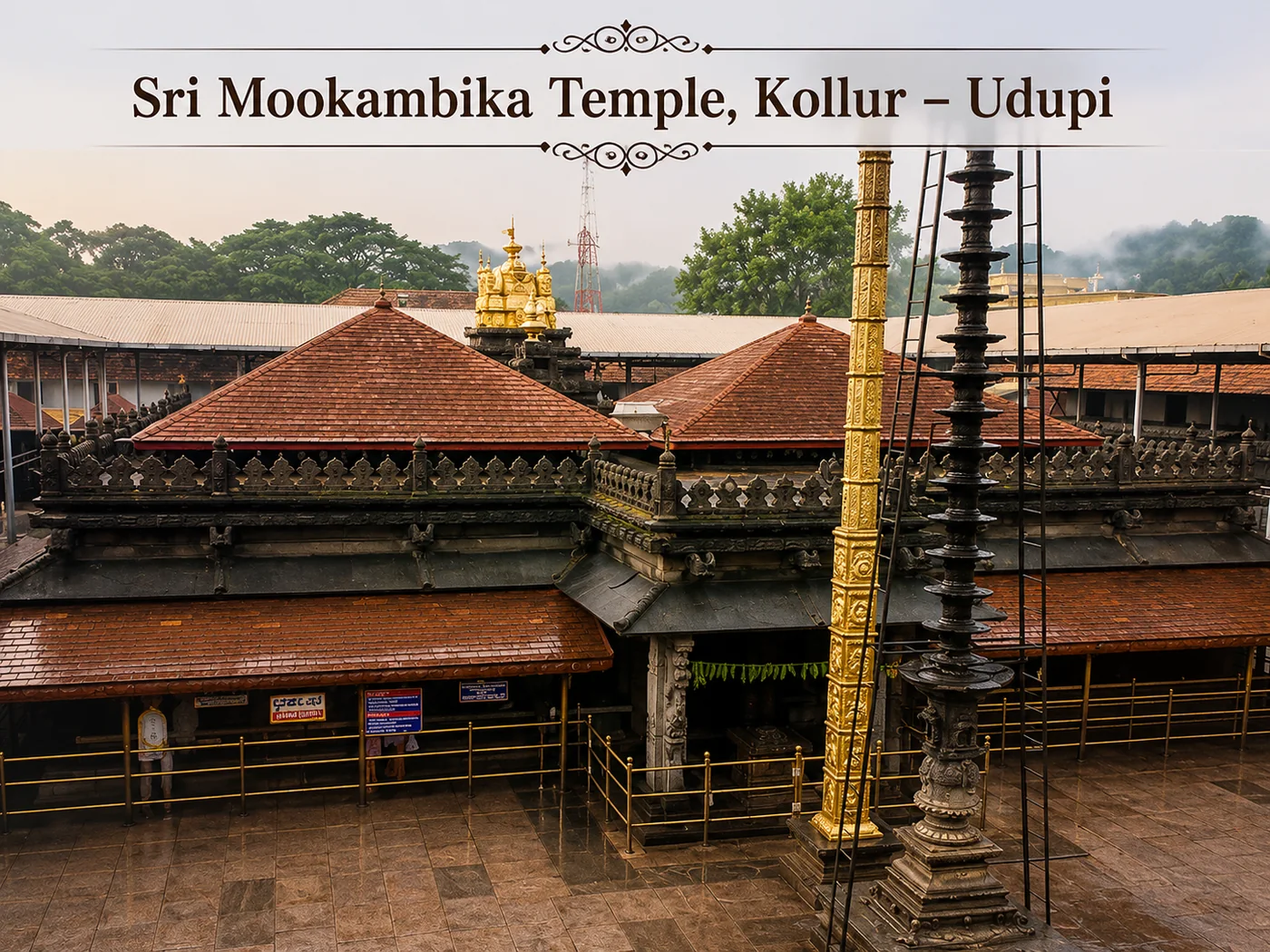
Located at the foothills of the Western Ghats, Sri Mookambika Temple in Kollur is one of Karnataka's most famous pilgrimage destinations. The temple is surrounded by dense greenery and lies close to the Souparnika River.
For generations, local traditions have associated the river and surrounding forests with medicinal plants and natural healing. These beliefs form an important part of Kollur's cultural heritage. However, there is no established scientific evidence that visiting the temple or consuming river water can cure a specific medical condition.
The natural surroundings nevertheless make Kollur a peaceful destination for spiritual reflection. The combination of forests, river views and traditional worship creates an experience that many visitors find calming.
With thousands of pilgrims visiting popular temples, effective temple administration software can help manage devotee services, schedules, bookings, donations and daily operations more efficiently.
2. Kateel Durga Parameshwari Temple – Dakshina Kannada
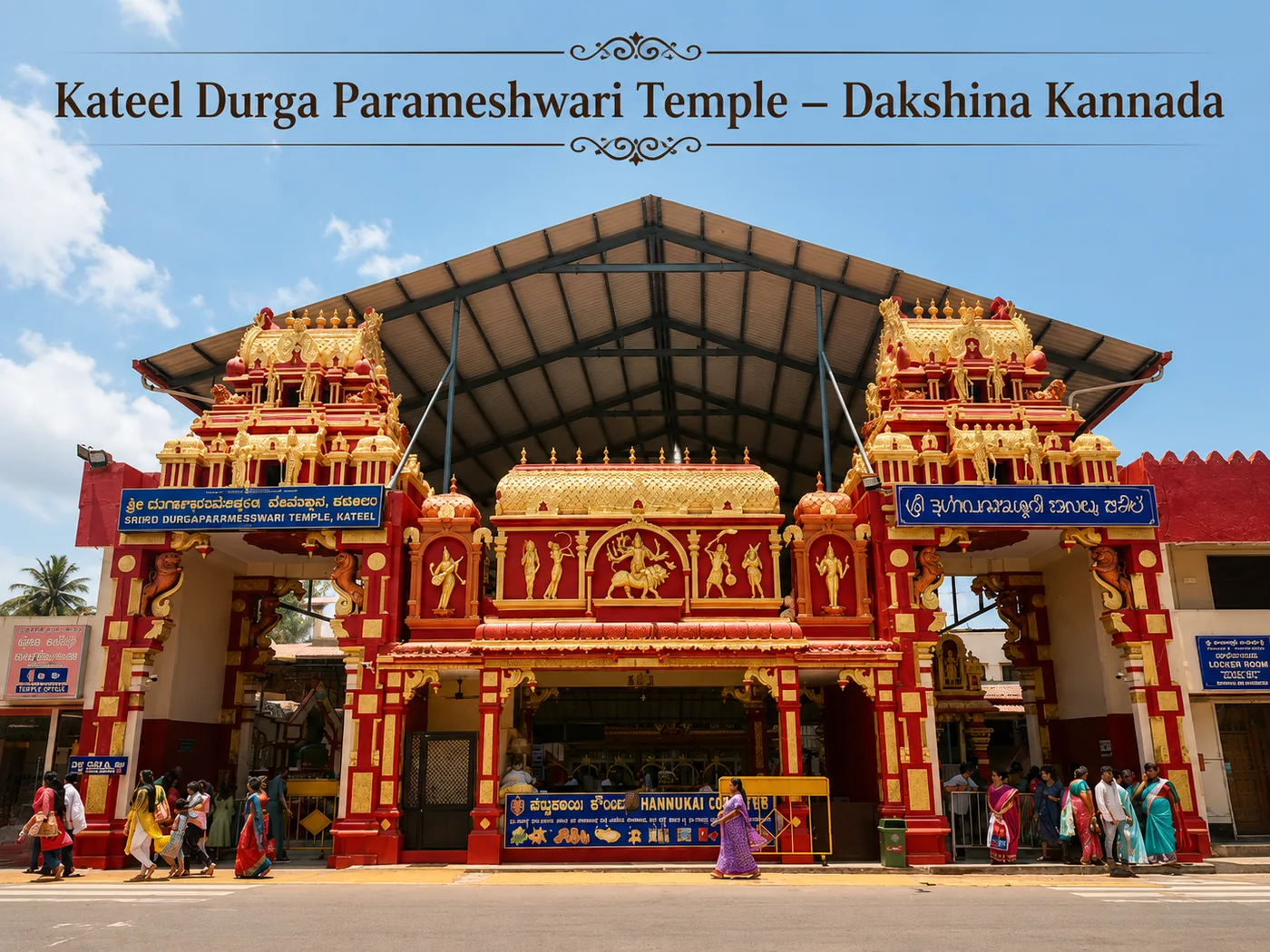
Situated on an island formed by the Nandini River, Kateel Durga Parameshwari Temple is one of coastal Karnataka's most distinctive pilgrimage destinations.
The temple has long-standing traditions associated with its sacred water bodies and their perceived beneficial properties. Such beliefs have been passed down through generations and remain an important part of the temple's spiritual identity.
However, traditional claims about healing should not be presented as scientifically proven medical benefits.
The river-island setting, greenery and peaceful surroundings are themselves major attractions. Visitors can experience the combination of spirituality and nature while exploring one of coastal Karnataka's important cultural landmarks.
For temple trusts, managing large visitor volumes requires more than traditional administration. Temple management software can support services such as seva booking, pooja booking, devotee registration, event management and digital payments, helping create a smoother experience for both administrators and devotees.
3. Sri Krishna Temple, Udupi
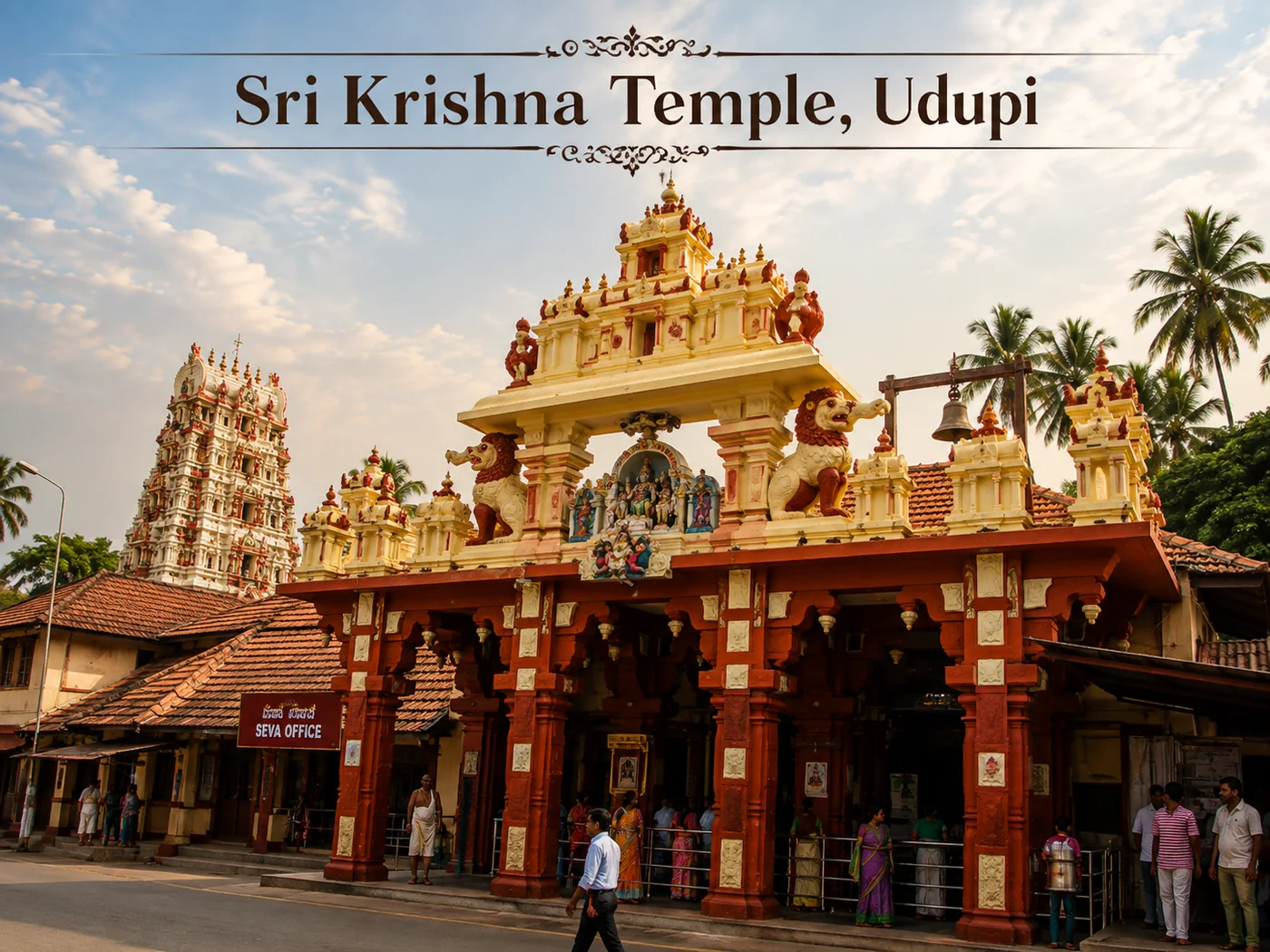
The Sri Krishna Temple in Udupi is one of India's most renowned pilgrimage centres and an important part of Karnataka's spiritual heritage.
The temple's daily rituals, prayer practices and disciplined spiritual environment offer visitors an opportunity to slow down and spend time away from the pressures of everyday life.
Prayer and meditation may contribute to an individual's sense of relaxation and emotional well-being, but they should not be presented as treatments for medical conditions.
Udupi's growing popularity also highlights the importance of digital transformation in temple management.
Modern devotees increasingly expect convenient services such as online temple booking, digital donations, online pooja booking, digital receipts and mobile notifications. A well-designed temple management system can bring these services together while maintaining the traditions and values of the institution.
4. Dharmasthala Manjunatha Temple – Dakshina Kannada
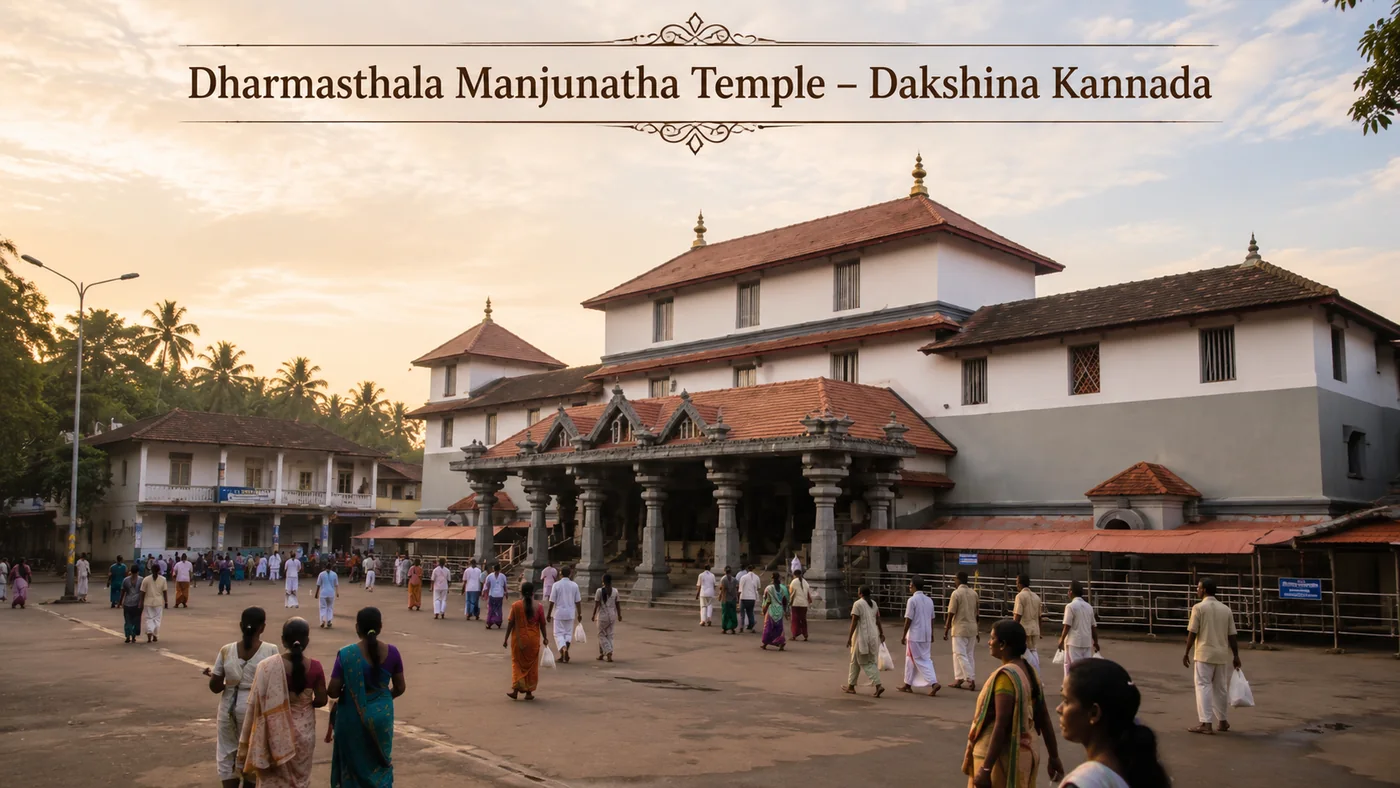
Dharmasthala Manjunatha Temple is particularly unique because of its connection with spirituality, charity, education and healthcare.
The Dharmasthala ecosystem includes several institutions involved in healthcare and Ayurveda. Associated Ayurveda institutions have also undertaken clinical research into various traditional treatments.
This provides an interesting example of the relationship between traditional Indian knowledge and modern research. However, research into Ayurveda should not be interpreted as proof that visiting the temple itself can cure a disease.
Dharmasthala also demonstrates the complexity of managing a large religious institution. Temple trusts may need to handle donations, accounts, inventory, events, devotees, staff, facilities and multiple administrative activities.
A modern Temple ERP Software solution can bring these functions together, supporting temple accounting, finance management, inventory management, donation tracking, event management and administrative reporting.
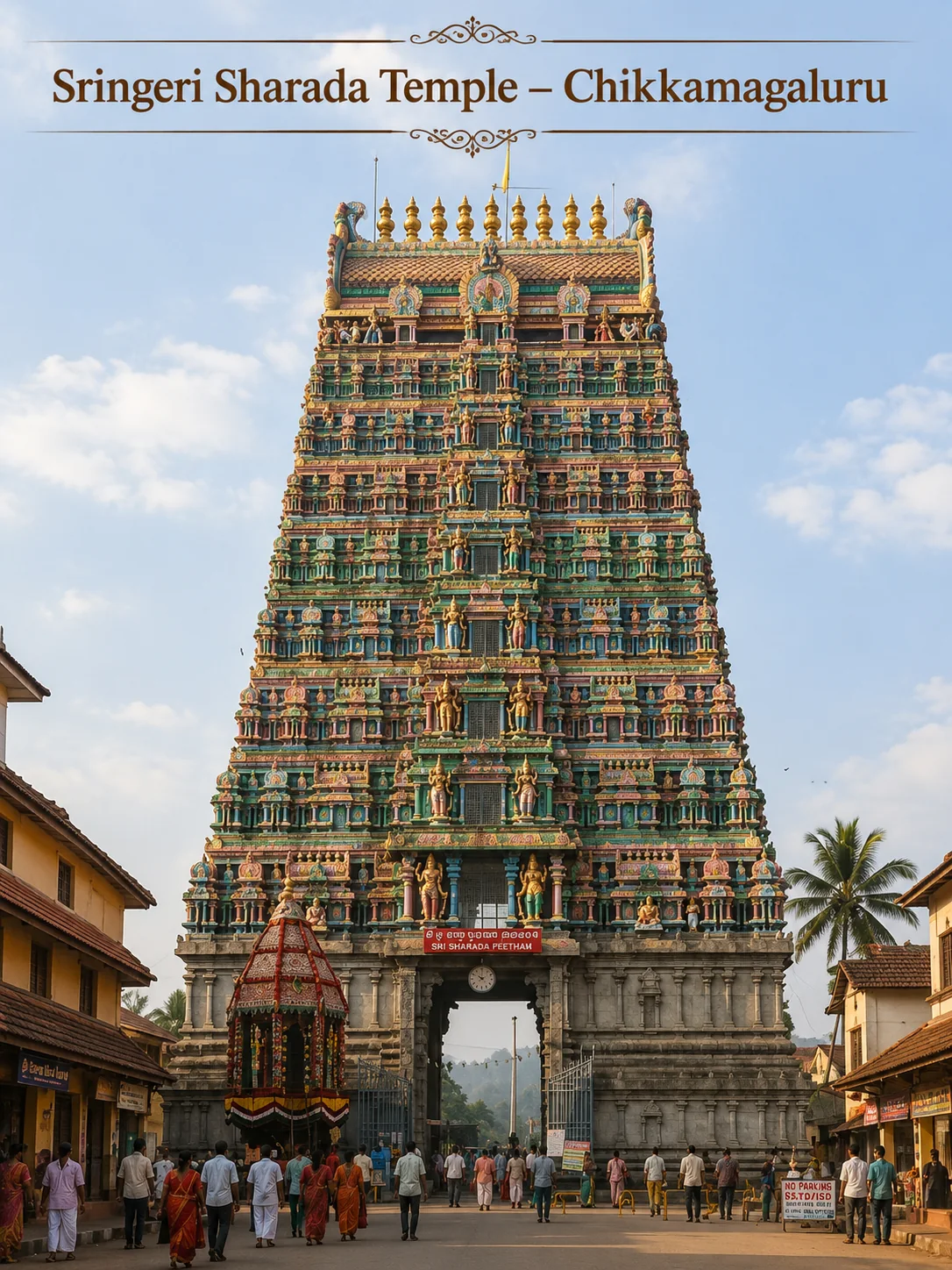
5. Sringeri Sharada Temple – Chikkamagaluru
Situated on the banks of the Tunga River and surrounded by the Western Ghats, Sringeri Sharada Temple offers visitors a peaceful combination of spirituality and nature.
The river, greenery and quiet surroundings create an environment suited to reflection and meditation.
There is no need to make unsupported claims about the medicinal properties of the temple or river. The real attraction is the experience itself—the opportunity to spend time in a calm environment surrounded by centuries of spiritual and cultural heritage.
As religious institutions evolve, destinations like Sringeri also demonstrate the importance of temple administration software for managing devotees, donations, accounting, events, communications and other day-to-day operations.
From Traditional Temple Administration to Digital Transformation
Temples have traditionally relied on dedicated staff, registers, receipts and manual processes to manage their activities. As visitor numbers and administrative responsibilities grow, these methods can become increasingly difficult to maintain.
A comprehensive Temple Management System can support areas such as:
- Temple Accounting Software for income, expenses and financial records
- Temple Donation Management Software for donations and digital receipts
- Online Temple Booking System for seva and pooja services
- Inventory Management for temple materials, prasada and assets
- Event Management for festivals and special programmes
- Devotee Management Software for maintaining devotee information
- Digital Payments for convenient and traceable transactions
- Temple Mobile App for bookings, notifications and communication
- Financial and operational reports for improved temple transparency
- Centralised tools for Temple Trust Management and committee administration
The objective is not to replace traditional temple practices. Instead, technology can reduce administrative workload and allow temple staff to focus more on devotees, services and the preservation of heritage.
Where Faith Meets Modern Administration
The temples of Karnataka represent centuries of faith, culture and community service. From the forests of Kollur to the river island of Kateel, the spiritual atmosphere of Udupi, the service-oriented ecosystem of Dharmasthala and the peaceful surroundings of Sringeri, every destination offers something unique.
Their stories also demonstrate how religious institutions are evolving. Today's devotees may still follow centuries-old traditions, but they increasingly expect modern conveniences such as online booking, digital payments, transparent donations and easy access to temple services.
This is where modern Temple Automation Software can complement traditional administration. The future of temple management does not have to choose between tradition and technology. The two can work together—preserving ancient practices while making temple administration more efficient, transparent and accessible.
A Smarter Future for Temple Management
For temples looking to bring Temple Management Software, Temple ERP, accounting, donations, bookings, devotee management and digital administration together on one platform, TempleOS is designed to support the digital transformation of modern temples.